Oil & Health · 1 min read
How Should You Choose a Cooking Oil for Health?
A useful choice depends on at least four questions: fatty-acid profile, cooking conditions, flavor, and how often you use the oil.
Read article →OILS & FATS, CLEARLY EXPLAINED.
Clear, evidence-based explanations for families and curious young minds. Focused technical guidance for food businesses. Explore the science of oils and fats with Gil (Guang) Wang, Ph.D.

Oils & fats, clearly explained.
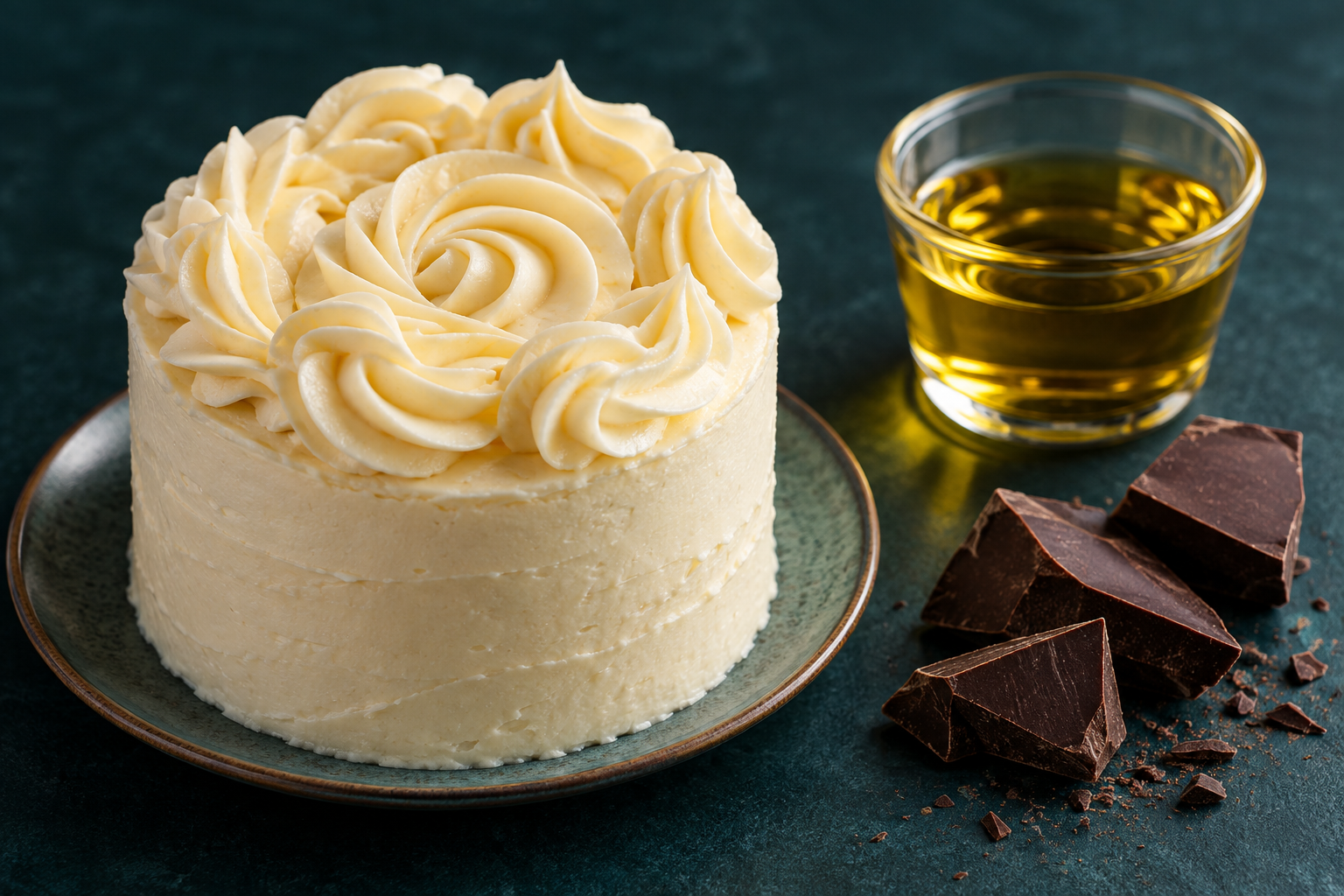
EVERYDAY LIPID / LEARN
Shopping labels, kitchen choices and simple science. Learn with explanations designed for adults and teens.
Start learningEVERYDAY LIPID / CONSULTING
Investigate oil quality, product texture and batch variation with a defined assessment and practical next steps.
Explore consultingEVERYDAY OIL SCIENCE / FOR FAMILIES & TEENS
Learn what oils are made of, what changes during heating, and what health research can—and cannot—tell us.
OIL & HEALTH / FEATURED READING
Oil & Health · 1 min read
A useful choice depends on at least four questions: fatty-acid profile, cooking conditions, flavor, and how often you use the oil.
Read article →Oil & Health · 1 min read
The better question is not whether saturated fat is simply “good” or “bad,” but what replaces it.
Read article →Oil & Health · 1 min read
Linoleic acid, the major omega-6 fatty acid in many vegetable oils, is essential. A common online claim says omega-6 fats are inherently inflammatory, but human trial evidence does not support that simple conclusion.
Read article →Oil & Health · 1 min read
Olive oil is often described as if one ingredient by itself prevents cardiovascular disease. The strongest evidence is more specific.
Read article →Oil Chemistry & Health · 1 min read
Oil changes during frying because heat, oxygen, water, and repeated use drive oxidation, hydrolysis, isomerization, and polymerization.
Read article →Oil & Health · 1 min read
Coconut oil is often marketed as if it were equivalent to purified MCT oil. Chemically, that is misleading.
Read article →Nutrition, cooking performance and price are different questions.
An oil choice makes more sense in the context of your overall diet and how you plan to use it. “Natural,” “premium” and “cold-pressed” do not answer every nutrition question.
The nutrition context: WHO guidance favors unsaturated fats over saturated and trans fats. What a food replaces in your diet matters, too.
Takeaway: compare the fat profile, the intended cooking use and your budget. A higher price alone is not a health ranking.
Read WHO’s dietary-fat guidance ↗General nutrition education; individual medical and dietary needs may differ.
Think about light, air and heat—not just convenience.
Exposure to light, oxygen and heat can contribute to oil deterioration. Storage conditions and time both matter.
Start here: follow the product’s storage instructions, close the container after use and choose a cool, dark place away from the stove.
Takeaway: buy a quantity that fits how quickly your household uses it. A large bargain bottle is less useful if it stays open for a very long time.
Suggest a kitchen question ↗A simple observation opens a window into molecular structure.
Fats contain mixtures of molecules with different melting behavior. Their composition, crystal structure and temperature influence whether they flow or hold their shape.
Try an observation: compare a covered spoonful of butter and a little cooking oil at the same room temperature. Describe their appearance and how they move when gently tilted. No heating is needed.
Takeaway: physical state helps explain food texture. It cannot, by itself, tell you whether a food or diet is healthy.
Ask about a family learning session ↗The same symptom can have more than one cause.
“Grainy” describes a sensation, not a diagnosis. Depending on the buttercream style, possible contributors include undissolved sugar, fat crystals or a disrupted mixture.
Start here: record the recipe, ingredient temperatures, mixing sequence and when the graininess first appears. Compare a good batch with a poor one before changing ingredients.
Takeaway: the right correction depends on what is creating the texture. A recipe-specific review is more useful than a universal fix.
Making this commercially? Let’s talk ↗Its appearance gives you a clue, not the whole answer.
Chocolate can develop fat bloom or sugar bloom. Fat movement and changes in crystal structure can affect the surface; moisture can dissolve sugar that later recrystallizes.
Start here: look at temperature fluctuations, humidity, packaging and whether a filling is in contact with the chocolate.
Takeaway: controlling temperature and moisture are different tasks. Appearance alone does not establish the cause or the safety of a product.
Need a product investigation? ↗Ask what the butter is doing in this particular recipe.
Butter contributes fat, water and milk solids. Its solid fat structure can also help trap air during creaming. Liquid oil behaves differently.
Start here: ask whether the recipe depends on creaming, a firm structure, or simply adding fat. A straight one-for-one swap changes more than the fat source.
Takeaway: test a small batch and compare texture, spread and moisture. There is no single conversion that preserves every recipe’s behavior.
Explore a practical workshop ↗What would you like explained next?
Suggest a topic ↗SPECIALIST CONSULTING / FOR FOOD BUSINESSES
Focused help for businesses already making food. Begin with the symptom, examine the evidence, and agree on a useful next step.
AI CONSULTATION / FIRST PRINCIPLES + 4P
Discuss your product, the observed problem and your evidence. Explore relevant Product, Process, Procedure and People factors, or prepare a guided case for specialist review.
Grainy buttercream. Soft fillings. Chocolate bloom. Connect ingredients and handling to the result you’re seeing.
Discuss a texture problem ↗Oil separation, batch variation or a recipe that changes at scale. Build a focused investigation before changing everything.
Discuss your product ↗Review oil handling, product variation and testing needs to identify what your team should measure and investigate.
Discuss frying performance ↗START HERE / ONE CLEARLY DEFINED PROBLEM
Review what you know, identify what remains uncertain, and decide what to investigate next.
Best fit: your business already makes and sells food, the problem recurs, and you can provide relevant records or test results.
This is a paid, fixed-scope service. Scope, fixed fee and delivery date are agreed in writing before work begins; submitting an inquiry does not commit you to a purchase. Laboratory testing, plant visits, formulation trials and implementation are quoted separately. The deliverable is an evidence-based investigation plan; resolving the cause may require further testing.
HOW THE WORK CAN DEVELOP
Begin with a focused question. Agree on the scope, available evidence and expected deliverables before work starts.
START WITH THE EVIDENCE
A focused review of one technical concern and the data already available.
FOLLOW-ON SUPPORT WHEN NEEDED
A defined investigation that links the problem to a practical testing and verification plan.
BUILD YOUR TEAM’S UNDERSTANDING
Applied education shaped around your team’s products, questions and level of experience.
Projects are individually scoped. Laboratory testing, fabrication and plant implementation are arranged separately when needed. Engagements are subject to availability and conflict-of-interest review.
FOR R&D, QUALITY & OPERATIONS
Support for R&D, quality and operations teams that need a deeper understanding of how ingredients, processing and measurement interact.
Investigate color change, oxidation, off-flavor and inconsistent shelf-life results through a structured review of chemistry, handling and analytical evidence.
Color reversion / Oxidation / Test interpretation
Translate a production concern into clear hypotheses, a practical testing plan and a disciplined approach to evaluating process changes.
Refining / Filtration / Process-contaminant research
Connect fat composition, crystallization and processing history to the texture and consistency required in a finished food application.
Specialty fats / Bakery / Confectionery / Frying
NEW / RESEARCH PUBLICATIONS
Three research reports by Gil Wang, polished for publication with charts, diagrams, tables and linked references.
RESEARCH REVIEW / 01
Application coverage, alternative processing routes and commercial opportunities for non-interesterified fats, edited from the original research report.
Read publication →RESEARCH REVIEW / 02
The original macro-to-micro analysis of soybean oil, with thirteen food applications, clearly labeled volume estimates and refining and packaging implications.
Read publication →RESEARCH REVIEW / 03
North American and EU market drivers, supplier landscape, indicative market sizing and opportunities for bakery and confectionery fat suppliers.
Read publication →THE RESEARCH BEHIND THE PRACTICE
A selection of literature reviews, design concepts and process-mapping work. Each summary explains the question, the approach and its potential application.
TECHNICAL LITERATURE REVIEW · AUGUST 2026
How should a team investigate an increasing red value after refining? This review compares proposed mechanisms and organizes the evidence needed to interpret a color change.
How do tocored-related mechanisms connect to visible oil color, and what can a Lovibond reading establish on its own?
A literature synthesis comparing mechanistic explanations, measurement conditions and a diagnostic sequence combining color measurements with spectral and compositional analysis.
Define a focused analytical investigation before committing to a process change. Separate observations, hypotheses and evidence that would distinguish competing explanations.
Based on “Tocored and Soybean Oil Color Reversion,” a technical working report. This overview describes the scope; it is not a validated client case study.
Discuss a color-quality problem ↗PROCESS EQUIPMENT CONCEPT · APRIL 2026
A concept package that connects an oil-transfer requirement with equipment selection, staged filtration, instrumentation and operating considerations.
What needs to be defined before procuring a portable system for transferring and filtering vegetable oil?
A preliminary flow arrangement and component list covering pumping, prefiltration, final filtration, pressure monitoring, hoses and a mobile frame.
Turn a loosely defined equipment need into a clearer specification for discussion with qualified equipment suppliers.
Based on the portable oil-loading skid design and full-package documents. Concept stage only; pressure protection, materials, sanitation and operating limits require engineering verification.
Discuss an oil-handling requirement ↗SAMPLING TOOL CONCEPT · SEPTEMBER 2026
A prototype specification for a stainless-steel core sampler, translating a target sample size into a fabrication discussion and bilingual supplier inquiry.
How can an operational sampling need be communicated clearly enough for a fabricator to evaluate a prototype?
A drill-driven core-sampler concept with dimensional requirements, product-contact finish considerations and a Chinese–English request for quotation.
Help teams articulate sampling requirements and identify the technical questions to resolve before a prototype is commissioned.
Based on the 316L fat-sampler prototype RFQ. The concept is not a validated or commercially available tool; mechanical safety, cleanability and sampling performance remain to be verified.
Discuss a sampling challenge ↗PROCESS MAPPING · APRIL 2026
Mapping material movement from receiving through processing and delivery to make handling interfaces and documentation needs easier to review.
Where should a team focus its review of segregation, material movement and records across a multi-stage oil supply chain?
A process-flow mapping exercise organizing receipt, transport, storage, processing, blending and dispatch into a sequence of review points.
Make responsibilities and information gaps visible before a detailed process or certification review.
Generalized from an RSPO SG flow-mapping document. Facility identities and operating instructions are omitted. This summary does not certify compliance or prescribe segregation procedures.
Discuss a process-mapping project ↗FOR BRANDS, EDUCATORS & CONTENT TEAMS
Bring clear technical explanations to your customers through short videos, demonstrations and workshops.
Discuss a content collaboration ↗
THE PROFESSIONAL BEHIND BOTH PATHS
Food scientist · R&D leader · Technical educator
Making oil and fat science useful—from everyday kitchen questions to decisions in food production.
For families, the aim is to explain the science clearly and put common claims into context. For businesses, the aim is to examine evidence and define a practical path forward. Experience spans fats and oils, specialty ingredients, product development, analytical investigation and commercial scale-up. A Ph.D. in Food Science & Technology from Iowa State University underpins an applied approach to technical problem-solving.
Research interests span lipid oxidation, emulsions, phospholipids and oil processing. Industry experience includes specialty fats, bakery and confectionery applications, frying systems and process-contaminant mitigation.
View the AOCS refining-course instructor profile ↗LET’S DEFINE THE NEXT STEP
Suggest an educational topic, discuss a workshop or content collaboration, or request a technical assessment for your food business. Please keep initial inquiries non-confidential.
Prefer email? Use the address above.
Share only non-confidential information.
START A CONVERSATION
Your request is saved securely for review. For consultations, we first check project fit and agree on scope. Call times are confirmed by email.