
VISUAL EXPLAINER
Coconut oil is not purified MCT oil
Caprylic acid · C8:0
CH3–(CH2)6–COOH
Capric acid · C10:0
CH3–(CH2)8–COOH
Lauric acid · C12:0
CH3–(CH2)10–COOH
Free-fatty-acid structures are shown. Coconut oil is rich in C12; commercial MCT oil is commonly concentrated in C8/C10 triacylglycerols.
VISUAL EXPLAINER
Chain length changes the dominant transport route
Schematic of predominant routes; transport is not exclusive. C12 (lauric acid) is intermediate and should not be equated with purified C8/C10 MCT oil. Experimental route evidence includes animal studies; this is not a weight-loss claim.
Source: Experimental study of portal and lymphatic transport
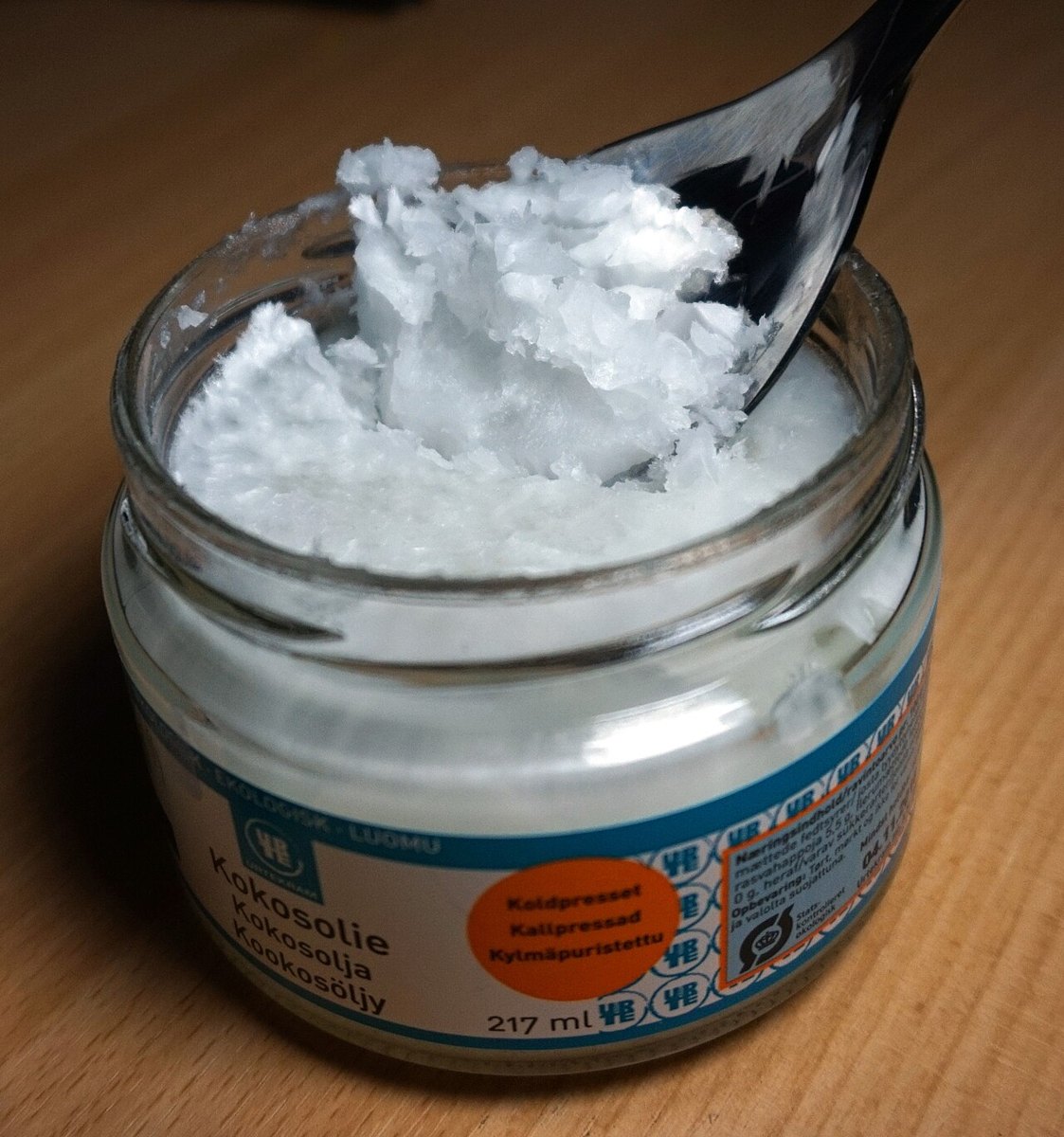
Coconut oil is rich in saturated fat and is dominated by lauric acid (C12:0), with smaller amounts of caprylic (C8:0) and capric (C10:0) acids. Commercial MCT oil is typically concentrated in C8 and C10 triglycerides. Evidence from purified MCT oil should therefore not automatically be transferred to coconut oil.
A systematic review and meta-analysis of clinical trials found that coconut oil produced significantly higher LDL cholesterol than non-tropical vegetable oils.
Everyday Lipid takeaway
Coconut oil and MCT oil are not the same product. Use coconut oil for flavor if desired, but do not treat it as metabolically equivalent to purified MCT oil.
References
- Neelakantan N et al. Circulation. 2020;141:803–814. DOI: 10.1161/CIRCULATIONAHA.119.043052.
- Codex Alimentarius. CXS 210-1999.