Cooking Oils, Heat and Health
Aldehydes in heated oils, oil by oil — what has actually been measured
1. The short version
Heat cooking oil and its unsaturated fats break down into small reactive molecules called aldehydes. One of them, 4-HNE, is the most studied. It forms from linoleic acid — so the more linoleic acid an oil contains, the more 4-HNE it tends to make when hot. Fried food absorbs these compounds, and you eat them.
That is well established and reproduced across many laboratories. What follows from it is more limited than headlines suggest. Animal studies show repeatedly heated oils raise inflammatory markers. Human evidence linking these aldehydes to high blood pressure and artery disease is observational — it shows association, not cause. And the popular idea that antioxidant supplements protect against any of this has the weakest support of anything on this page: the largest trials found no benefit at common doses, and for some supplements possible harm.
formed from linoleic acid
after 5 h at 185 °C
and highest in that test
eating oxidised oil causes wrinkles
2. What happens when oil gets hot
Oil is mostly triglycerides: a glycerol backbone carrying three fatty acids. The number of double bonds in those fatty acids decides how easily heat breaks them apart.
- Saturated fats (no double bonds) — most heat-stable.
- Monounsaturated fats (one double bond, e.g. oleic acid in olive oil) — next.
- Polyunsaturated fats (two or more, e.g. linoleic acid) — least stable.
Heating starts a chain reaction called lipid peroxidation, in two stages:
| Stage | What forms | Why it matters |
|---|---|---|
| Primary | Hydroperoxides | Unstable, very short-lived. They break down almost as fast as they form, so they are not what reaches you in meaningful amounts. |
| Secondary | Aldehydes — MDA, 4-HNE, 4-HHE | These are the molecules of concern. More stable than hydroperoxides, absorbed by fried food, reactive towards proteins and DNA. |

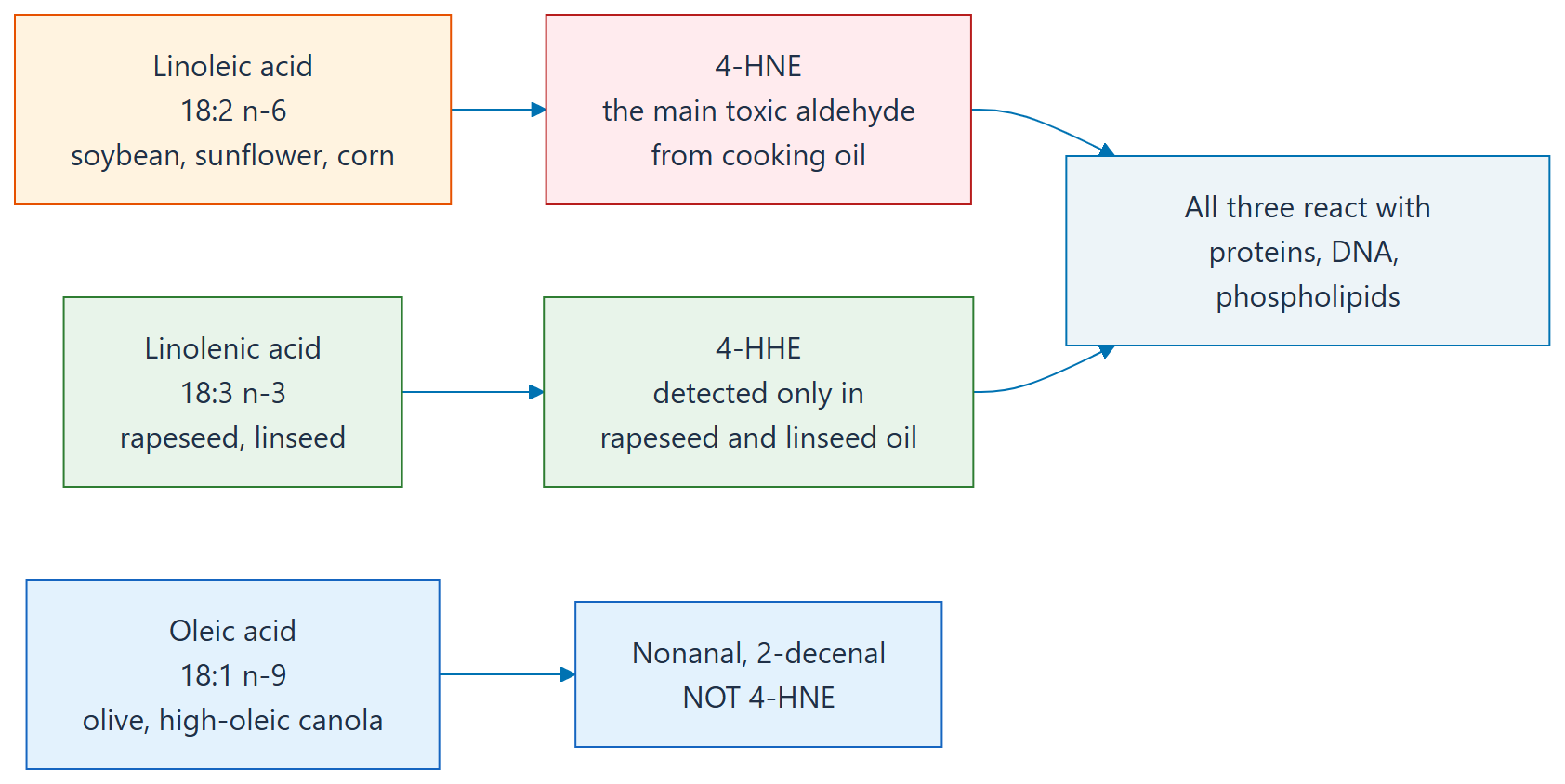
3. Which fat becomes which aldehyde
4. The oil-by-oil comparison
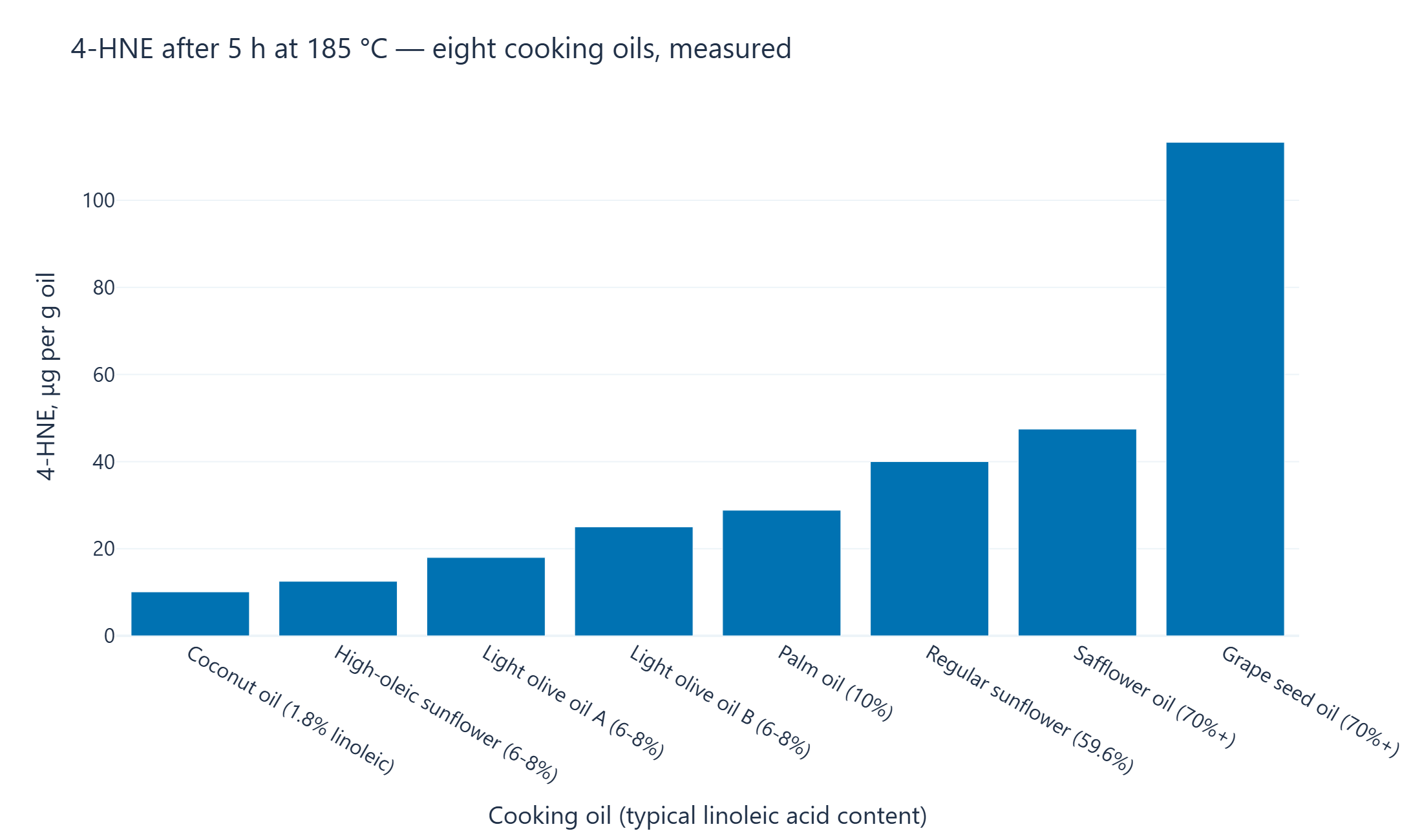
This is the core of the page: what has actually been measured, oil by oil. Two things to keep in mind. First, values are only comparable within the same test — different temperatures, times and methods give different numbers. Second, “not measured” means nobody has published that measurement, which is itself worth knowing.
4.1 4-HNE after 5 hours at 185 °C (the most direct comparison)
| Oil | Linoleic acid (% of fat) | 4-HNE, µg/g 185 °C, 5 h | Source |
|---|---|---|---|
| Coconut oil | 1–2.5 | 10.1 | Liu 2017 |
| High-oleic sunflower oil | 2.1–17 | 12.5 | Yuan 2018 |
| Light olive oil (two samples) | 3.5–21 | 18.0 / 25.0 | Yuan 2018 |
| Palm oil | 9–12 | 28.8 | Liu 2017 |
| Regular sunflower oil | 45.4–74 | 40.0 | Yuan 2018 |
| Safflower oil | 70–78 | 47.5 | Liu 2017 |
| Grape seed oil | ≈ 70 | 113.3 | Liu 2017 |
| Soybean oil | 48–59 | 36.9 | Bastos 2017 — 180 °C, continuous heating (duration not stated in the abstract) |
| Canola / rapeseed oil | 15–30 | not on this test | Formation rate is 6× lower than soybean’s (Figure 4); no 5-hour value published |
| High-oleic canola oil | 6.6–14.4 | not measured | Petersen 2013 measured 4-HNE in this oil during 32 h frying, but the numbers are paywalled; a review citing it reports only that sunflower was highest and palm lowest. Flagged as an unresolved gap. |
| High-oleic soybean oil | 1.3–3.5 | not measured | No numeric aldehyde value of any kind was found in the literature for this oil |
4.2 How fast each oil makes 4-HNE
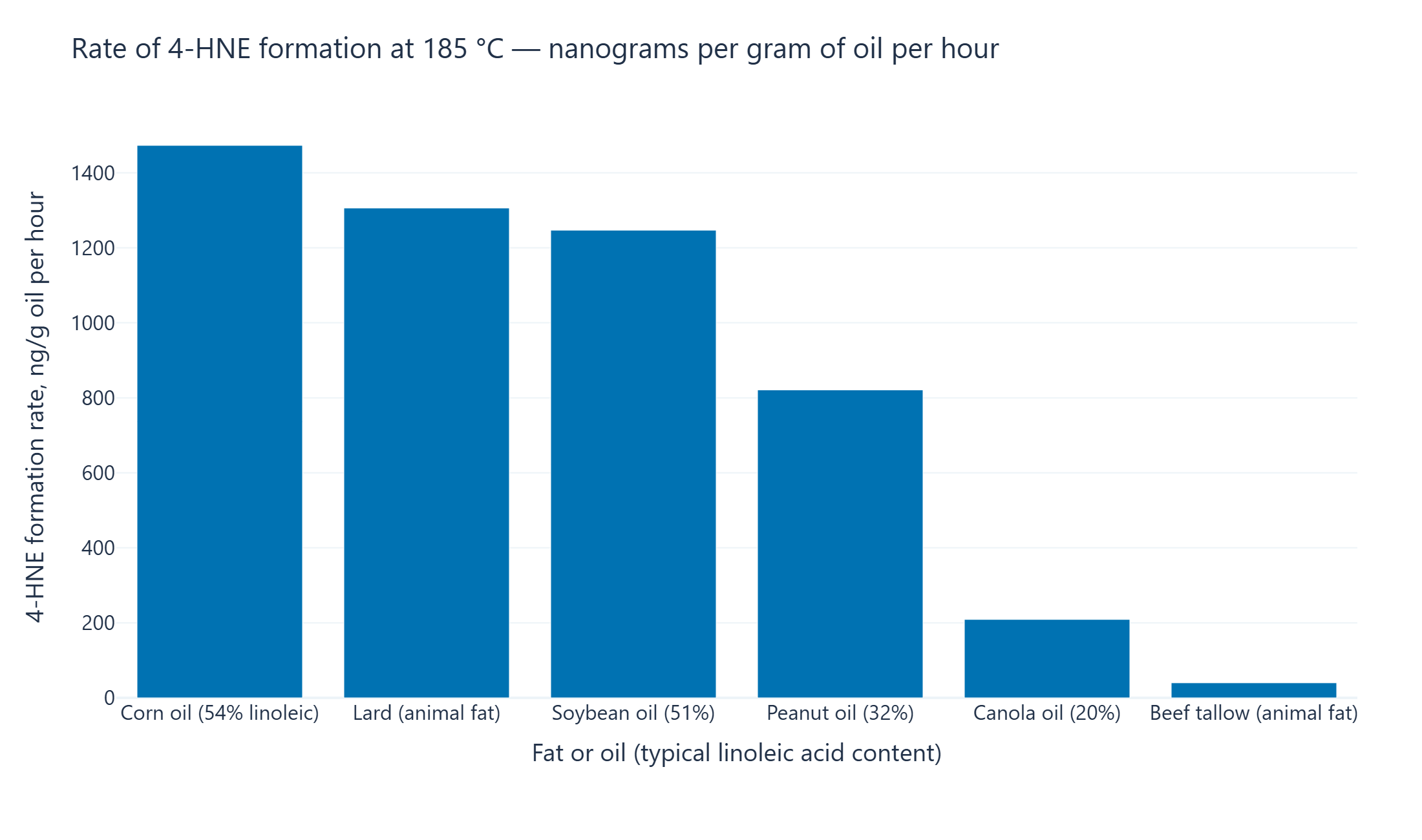
A different way to measure the same thing: how much 4-HNE appears per hour of heating. This covers oils the 5-hour test did not include.
| Fat or oil | Linoleic acid (%) | 4-HNE formation rate (ng per g oil per hour, 185 °C) |
|---|---|---|
| Corn oil | 34–65.6 | 1,473 |
| Lard (animal fat) | — | 1,306 |
| Soybean oil | 48–59 | 1,247 |
| Peanut oil | 4–43 | 821 |
| Canola / rapeseed oil | 15–30 | 209 |
| Beef tallow (animal fat) | — | 40 |
Canola is the interesting case. Its rate is six times lower than soybean’s, and in the original work it produced the lowest 4-HNE of the plant oils tested — lower even than peanut oil, despite peanut oil having more linoleic acid. Canola also produced the highest TBARS value, a different oxidation marker, which the authors attributed to its 9.4 % linolenic acid. Different markers rank the same oils differently; that is a real property of the chemistry, not a contradiction.
4.3 Other measurements of the same pattern
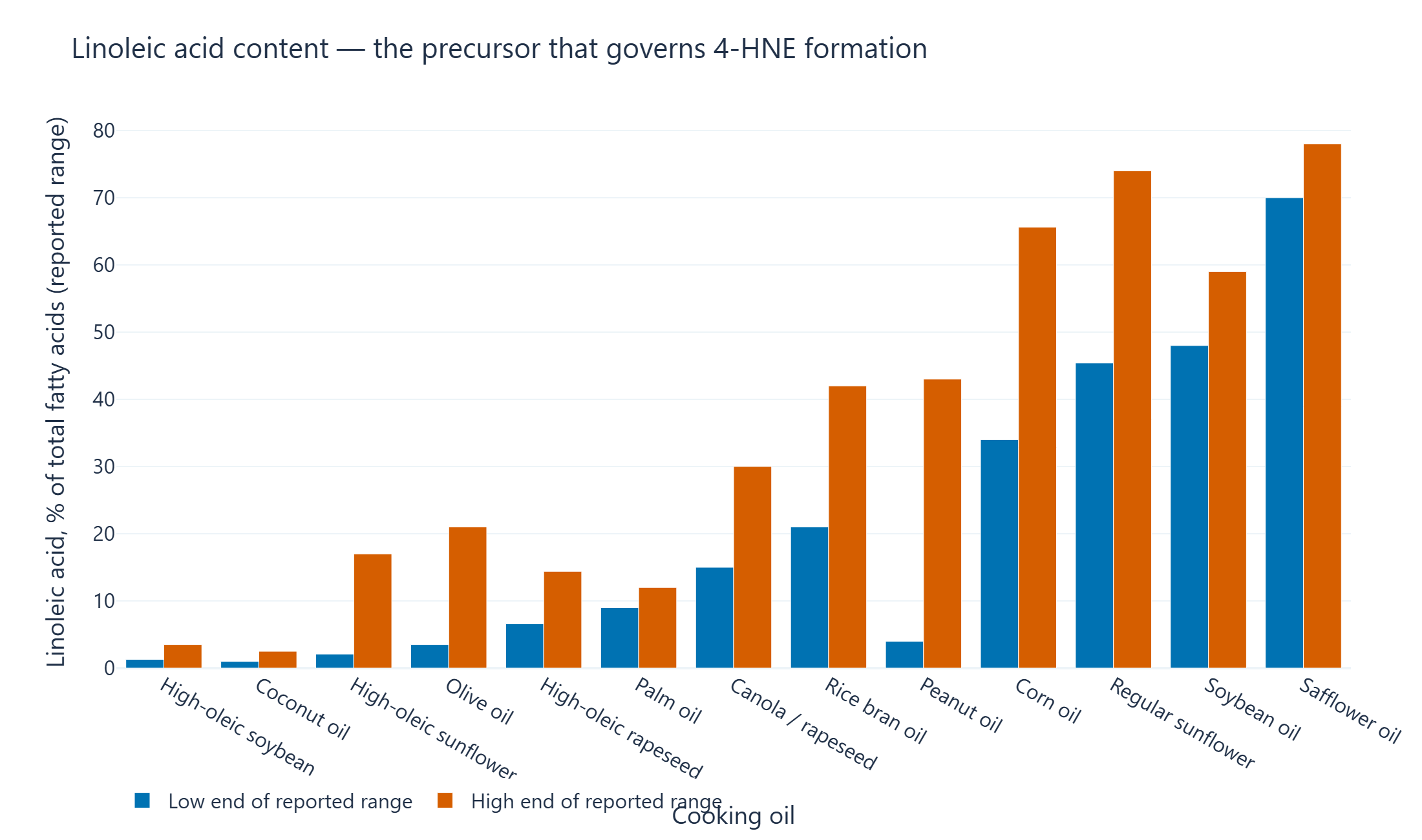
4-HNE is not the only aldehyde, and different studies measure different things. Every one of them puts the linoleic-rich oils at the top.
| Measurement | Conditions | Result (worst first) | Source |
|---|---|---|---|
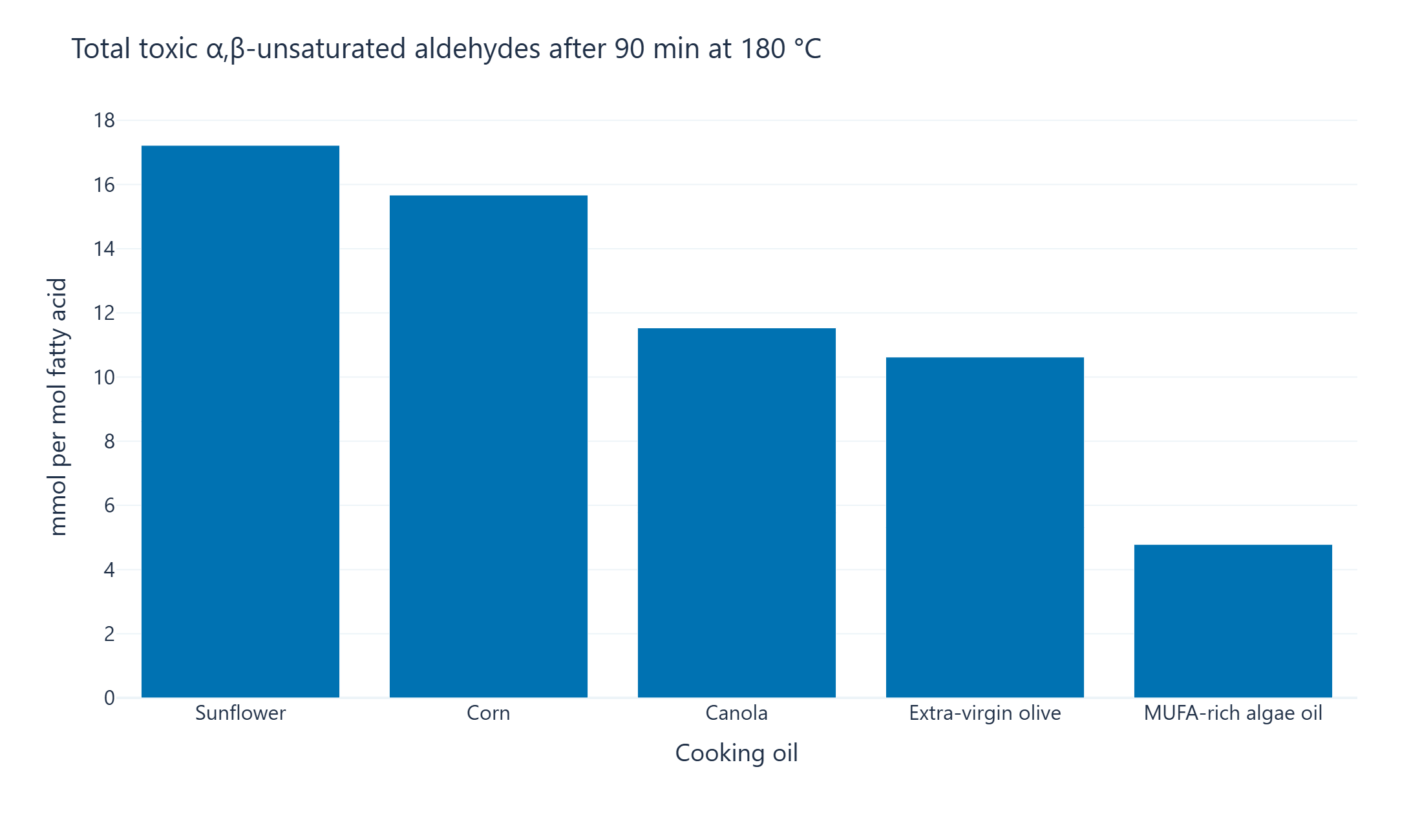
| Total toxic α,β-unsaturated aldehydes | 180 °C, 90 min | Sunflower 17.2 > corn 15.7 > canola 11.5 > olive 10.6 > algae oil 4.8 mmol per mol fatty acid | Moumtaz 2019 |
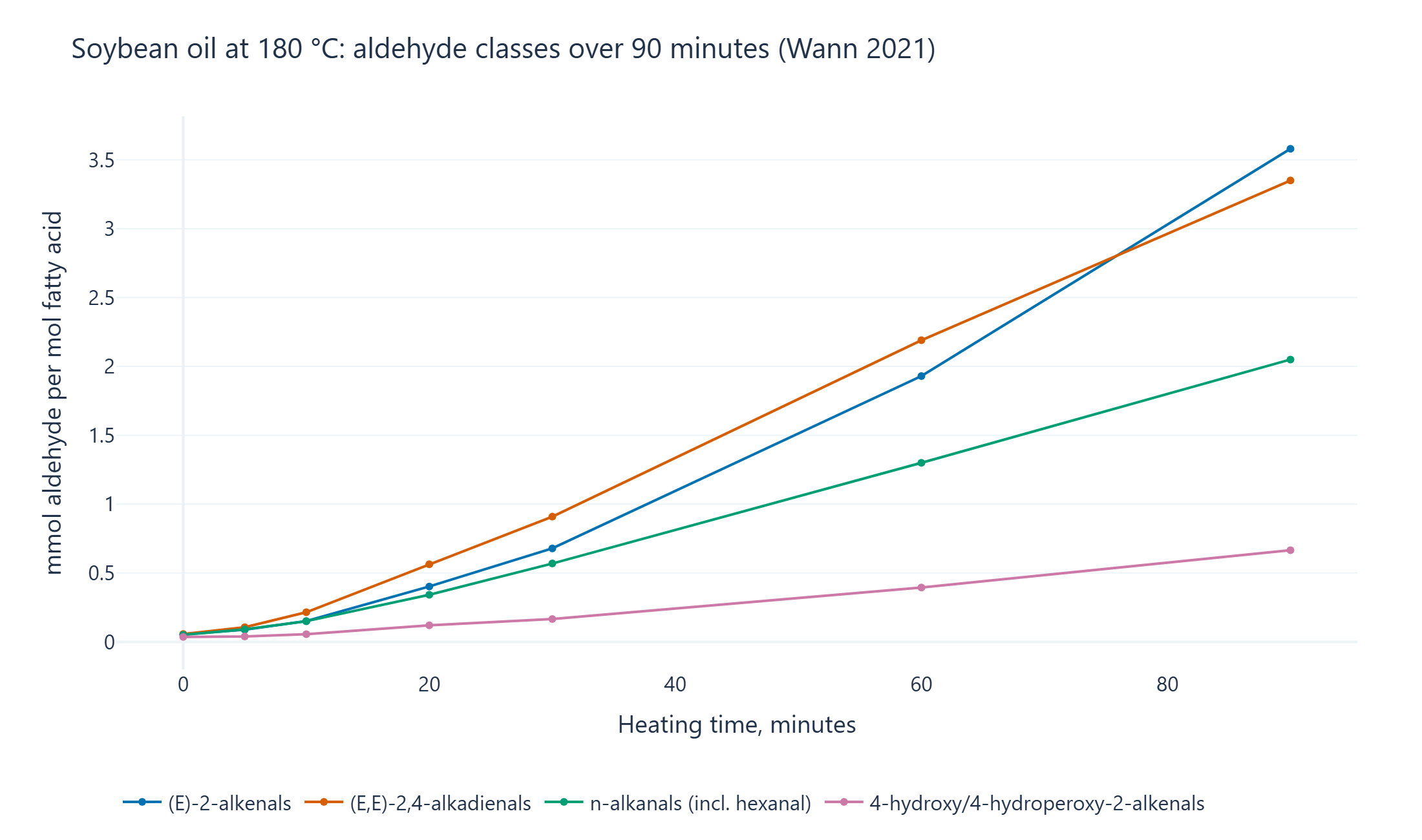
| Total unsaturated aldehydes | 180 °C, 90 min | Sunflower 17.22 > corn 15.67 (Moumtaz) > corn 10.10 > soybean 9.67 (Wann) > soybean 6.95 mmol per mol fatty acid — two independent studies agree that soybean and corn are the worst plant oils after sunflower | Wann 2021; Moumtaz 2019 |
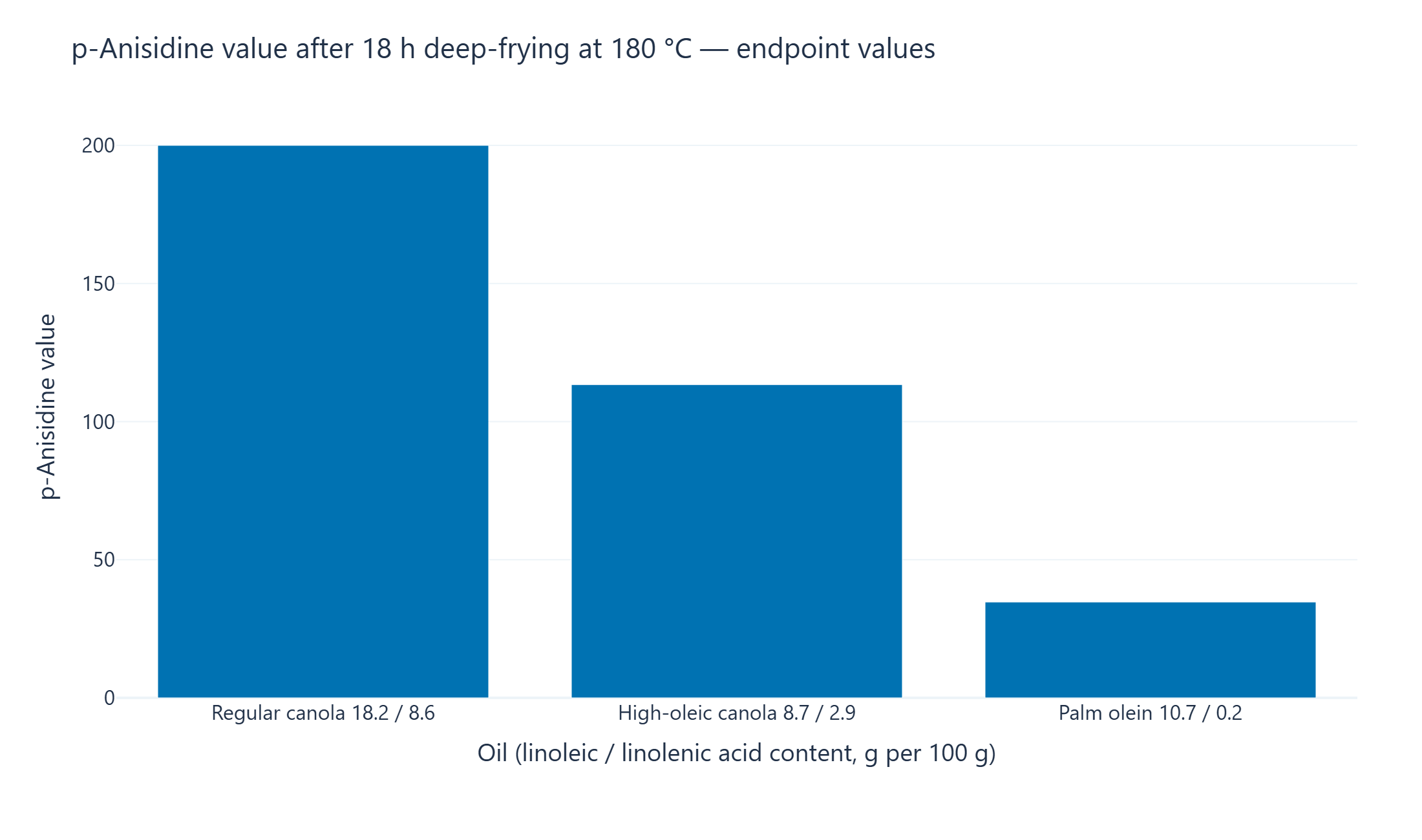
| p-Anisidine value | 175 °C, 18 h, 36 cycles | Rice bran 307 > soybean 262 > palm 192 > high-oleic canola (cold-pressed) 179 > high-oleic canola (hot-pressed) 152 | Zhou 2024 |
| Aldehydes in frying fumes | 180 °C, 2 h | Soybean 3,655 > olive 2,453 ≈ palm 2,197 µg per m³ of air |
Chiang 2022 |
| Acrolein in frying fumes | 180 °C, 2 h | Soybean 674 > olive 150 > palm 73 µg per m³ — soybean emits about 9× more than palm | Chiang 2022 |
| Hexanal in frying fumes | 180 °C, 2 h | Soybean 1,033 > palm 636 > olive 550 µg per m³ |
Chiang 2022 |
| Nonanal in frying fumes | 180 °C, 2 h | Olive 643 > palm 444 > soybean 222 µg per m³ — the oleic-derived aldehyde dominates in olive oil, as the chemistry predicts | Chiang 2022 |
5. Three aldehydes worth knowing
| Name | Comes from | What it does |
|---|---|---|
| MDA malondialdehyde | Fat oxidation generally; also made in small amounts by the body | A dialdehyde. Links proteins together and can damage DNA; the commonest marker of oxidative stress in research. Considered the more mutagenic of the three. |
| 4-HNE 4-hydroxy-2-nonenal | Linoleic acid (n-6) | The best-studied toxic aldehyde in cooking oil. Reacts very fast with sulfur groups on proteins, and with lysine and histidine. Active at low micromolar concentrations. Considered the more toxic, and can attract immune cells and promote cytokine release. |
| 4-HHE 4-hydroxy-2-hexenal | Linolenic acid (n-3) | Close chemical relative of 4-HNE, from the n-3 family. Detected in heated rapeseed and linseed oils; in one study it was detected only in those two and in none of the other oils tested. |
6. What the animal studies found
Seven controlled feeding studies gave animals repeatedly heated oils, then measured inflammation markers. Exposure ranged from three to twenty-four weeks.
| Oil fed | Duration | Animal | What rose |
|---|---|---|---|
| Repeatedly heated palm oil | 24 weeks | Rats | VCAM-1 |
| Repeatedly heated soybean oil | 24 weeks | Rats | ICAM-1, VCAM-1 |
| Repeatedly heated virgin coconut oil | 24 weeks | Rats | ICAM-1, VCAM-1, C-reactive protein |
| Used cooking oil | 10 weeks | Rats | IL-6, TNF-α |
| Cyclic fatty acid monomers + soybean oil | 28 days | Rats | IL-6 |
| Moderately/highly heated soybean oil | 21 days | Broiler chickens | IL-22 |
| Repeatedly heated canola oil | 4 weeks | Mice | TNF-α, IL-1β, IL-6, MCP-1, IFN-γ |
VCAM-1 and ICAM-1 are adhesion molecules — proteins that help immune cells stick to blood vessel walls, an early step in artery disease. In the original work the authors also reported that adhesion-molecule expression correlated positively with blood pressure.
7. What we know about people
| Finding | Evidence type | Strength |
|---|---|---|
| People with high blood pressure tend to have higher TNF-α and MDA and lower antioxidant capacity | Observational | Moderate Association only |
| Oxidised LDL is taken up by immune cells to form “foam cells”, which are cytotoxic and drive plaque formation | Laboratory mechanism | Strong But a mechanism is not an outcome |
| Dietary oxidised oil causes skin wrinkles | — | No evidence found Skin ageing from oxidative stress is mainly UV-driven, a different process |
8. The antioxidant question
If aldehydes cause oxidative damage, antioxidant supplements should help. This is where the evidence is most counter-intuitive.
| Supplement tested | What the trials found |
|---|---|
| Beta-carotene | Associated with increased all-cause mortality (RR 1.07, 95 % CI 1.02–1.11) |
| Vitamin A | Associated with increased all-cause mortality (RR 1.16, 1.10–1.24) — the largest signal |
| Vitamin E | Small increase in all-cause mortality (RR 1.04, 1.01–1.07); in a large prostate-cancer trial, 400 IU/day raised prostate cancer incidence |
| Vitamin C, selenium | No significant effect on mortality; selenium showed a small protective association in one analysis and is still under study |
Two qualifications keep this honest. These mortality signals appeared in the lower-bias subset of trials; pooled across all 68 trials the result was not statistically significant. And a later reanalysis argued that most original trials were not designed to test mortality at all, and that benefits may exist in people who were malnourished to begin with.
9. What to actually do
- Don’t reuse frying oil. Heating history matters at least as much as oil choice. Use fresh oil and discard it rather than topping up the same batch.
- For high heat, choose an oil low in linoleic acid: coconut, palm, olive, high-oleic sunflower, high-oleic canola. For dressings and low-heat uses the choice matters far less.
- Avoid very-high-linoleic oils for deep frying: safflower, grape seed, regular sunflower, corn and soybean are the worst performers in every measured comparison here.
- Don’t rely on antioxidant supplements for this. Get antioxidants from food.
- Ventilate the kitchen. Frying fumes carry measurable aldehydes including acrolein; soybean oil emitted about nine times more acrolein than palm oil in one study.
- Be sceptical of hype in both directions. “Seed oils are poisoning you” overstates observational data. “Only calories matter” ignores a mechanism measured directly and repeatedly.
10. How strong is each claim?
| Statement | Strength | Basis |
|---|---|---|
| Heating oil produces aldehydes, and fried food absorbs them | Strong | Many direct laboratory measurements |
| 4-HNE comes from linoleic acid; oleic acid cannot form it | Strong | Reaction chemistry and precursor mapping |
| Oils high in linoleic acid make more 4-HNE when hot | Strong | Measured, and reproduced across studies and methods |
| Linoleic acid content alone predicts the amount | Moderate | Necessary but not sufficient; antioxidants also matter |
| Repeatedly heated oils raise inflammatory markers in animals | Moderate | Seven feeding studies, but clustered and all in animals |
| Aldehyde intake contributes to high blood pressure and artery disease in people | Moderate to weak | Observational and mechanistic; causation not established |
| Antioxidant supplements protect against this | Not supported | Large trials show no benefit, some harm |
| Eating oxidised oil causes skin wrinkles | No evidence found | Not studied directly |
11. Sources
- Leong X-F. Lipid Oxidation Products on Inflammation-Mediated Hypertension and Atherosclerosis: A Mini Review. Front Nutr 2021;8:717740. doi:10.3389/fnut.2021.717740 (CC BY 4.0)
- Yuan J, Shoeman DW, Csallany AS. Formation of 4-Hydroxy-2-Trans-Nonenal, a Toxic Aldehyde, in Thermally Treated Olive and Sunflower Oils. J Am Oil Chem Soc 2018;95(7):813–823. doi:10.1002/aocs.12098
- Liu X. The effect of temperature and heating time on the formation of alpha,beta unsaturated hydroxyaldehydes in various vegetable oils and fats. M.S. thesis, University of Minnesota, 2014. hdl.handle.net/11299/166843 — formation-rate table
- Liu A. Temperature Dependence of 4-Hydroxy-2-Trans-Nonenal (HNE), a Toxic Aldehyde, in Coconut, Palm, Safflower and Grape Seed Oils. M.S. thesis, University of Minnesota, 2017. hdl.handle.net/11299/193414 — 185 °C/5 h values for those four oils
- Bastos LCS, de Almeida Costa EA, Pereira PAP. Development, validation and application of an UFLC-DAD-ESI-MS method for determination of carbonyl compounds in soybean oil during continuous heating. Food Chem 2017;218:518–524. doi:10.1016/j.foodchem.2016.09.036
- Wann AI, Percival BC, Woodason K, Gibson M, Vincent S, Grootveld M. Comparative 1H NMR-Based Chemometric Evaluations of the Time-Dependent Generation of Aldehydic Lipid Oxidation Products in Culinary Oils Exposed to Laboratory-Simulated Shallow Frying Episodes. Foods 2021;10(10):2481. doi:10.3390/foods10102481 (CC BY 4.0) — soybean aldehyde classes
- Moumtaz S, Percival BC, Parmar D, Grootveld KL, Jansson P, Grootveld M. Toxic aldehyde generation in and food uptake from culinary oils during frying practices. Sci Rep 2019;9:4125. doi:10.1038/s41598-019-39767-1 (CC BY 4.0)
- Chiang K-M, Xiu L, Peng C-Y, Lung S-CC, Chen Y-C, Pan W-H. Particulate matters, aldehydes, and polycyclic aromatic hydrocarbons produced from deep-frying emissions. npj Sci Food 2022;6:28. doi:10.1038/s41538-022-00143-5 (CC BY 4.0)
- Wroniak M, Raczyk M, Kruszewski B, Symoniuk E, Dach D. Effect of Deep Frying of Potatoes and Tofu on Thermo-Oxidative Changes of Cold Pressed Rapeseed Oil, Cold Pressed High Oleic Rapeseed Oil and Palm Olein. Antioxidants 2021;10(10):1637. doi:10.3390/antiox10101637 (CC BY 4.0)
- Zhou Z, Gao P, Zhou Y, Wang X, Yin J, Zhong W, Reaney MJT. Comparative Analysis of Frying Performance: Assessing Stability, Nutritional Value, and Safety of High-Oleic Rapeseed Oils. Foods 2024;13(17):2788. doi:10.3390/foods13172788 (CC BY 4.0)
- Grootveld M. Evidence-Based Challenges to the Continued Recommendation and Use of Peroxidatively-Susceptible Polyunsaturated Fatty Acid-Rich Culinary Oils for High-Temperature Frying Practises. Front Nutr 2022;8:711640. doi:10.3389/fnut.2021.711640 (CC BY 4.0)
- Abrante-Pascual S, Nieva-Echevarría B, Goicoechea-Oses E. Vegetable Oils and Their Use for Frying: A Review of Their Compositional Differences and Degradation. Foods 2024;13(24):4186. doi:10.3390/foods13244186 (CC BY 4.0)
- Petersen KD, Jahreis G, Busch-Stockfisch M, Fritsche J. Chemical and sensory assessment of deep-frying oil alternatives for the processing of French fries. Eur J Lipid Sci Technol 2013;115(8):935–945. doi:10.1002/ejlt.201200375 — reported here via secondary citation only; full text paywalled
- Warner K, Gupta M. Potato Chip Quality and Frying Oil Stability of High Oleic Acid Soybean Oil. J Food Sci 2005;70(6). doi:10.1111/j.1365-2621.2005.tb11462.x
- Ma L, et al. The effect of heating on the formation of 4-hydroxy-2-hexenal and 4-hydroxy-2-nonenal in unsaturated vegetable oils. Food Chem 2020;321:126603. doi:10.1016/j.foodchem.2020.126603 — cited only; all rights reserved, not reproduced
- Schaur RJ, Siems W, Bresgen N, Eckl PM. 4-Hydroxy-nonenal — a bioactive lipid peroxidation product. Biomolecules 2015;5(4):2247–2337. doi:10.3390/biom5042247
- Bjelakovic G, et al. Mortality in Randomized Trials of Antioxidant Supplements for Primary and Secondary Prevention. JAMA 2007;297(8):842–857; erratum 2008;299(7):765–766. Reanalysed in Biesalski HK et al. Nutrients 2010;2(9):929–949. doi:10.3390/nu2090929
- Klein EA, et al. Vitamin E and the Risk of Prostate Cancer: Updated Results of SELECT. JAMA 2011;306(14):1549–1556
12. Licensing and reuse
Every figure on this page was drawn by us from data published in open-access papers, not copied from them. Seven sources are licensed CC BY 4.0, which permits reuse and adaptation with attribution: Leong 2021, Moumtaz 2019, Chiang 2022, Wroniak 2021, Zhou 2024, Grootveld 2022, Abrante-Pascual 2024 and Wann 2021. Attribution appears in each figure caption and in the source list above.
Some sources are all rights reserved and were used for citation only, with no figures or tables reproduced: Ma 2020 (Food Chemistry, Elsevier), Viau 2016 (Eur J Lipid Sci Technol, Wiley) and Petersen 2013 (Eur J Lipid Sci Technol, Wiley). The two University of Minnesota theses are openly available through the university repository.
Limits. Some full texts are paywalled; where only the abstract or a secondary citation could be verified this is stated in the text. Values from different studies use different temperatures, times and methods and are not all directly comparable; the conditions are given with every figure. Fatty-acid percentages vary by variety and processing. Animal findings are labelled as animal findings. This is general information, not medical or dietary advice for an individual.